Solid Blocks / Fly Ash Brick /Solid Bricks
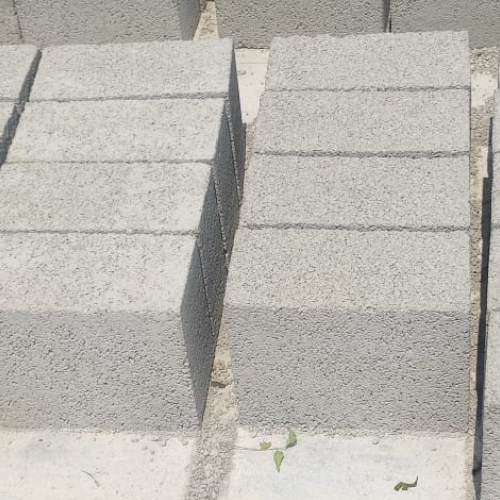
Solid Blocks
Let us face it; we all aspire to build structures that would last forever. No one builds a structure intending to take it down because of wear and tear soon. This is the reason why people are always looking for ways to make their structures as durable as possible. With durability and strength in mind, only two building materials come into play; cement concrete blocks and the traditional red bricks. Since differentiating between these can sometimes be painstaking, this article will help you with that by analyzing their differences so that you make an informed choice when building your structure.
Fly Ash Bricks
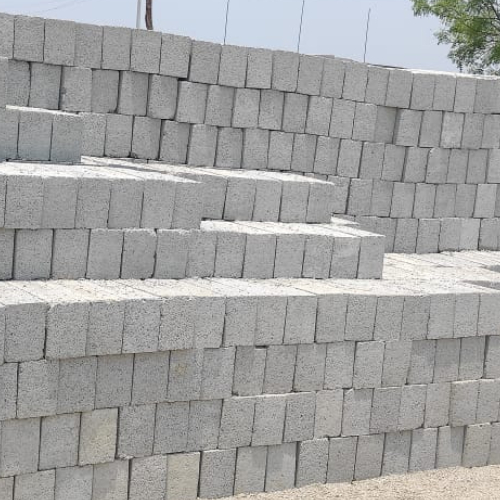
Fly ash brick (FAB) is a building material made up of class C or class F fly ash and water. It is used to make masonry units. The bricks can sustain more than 100 freeze-thaw cycles after being compressed at 28 MPa (272 atm) and cured for 24 hours in a 66 °C steam bath before being toughened with an air entrainment agent.
- Fly ash bricks absorb less heat than normal bricks, therefore it keeps your building cool even in summer, hence most suitable for Indian conditions.
- Due to its uniform and even shape, less mortar is required in construction. Also, plastering can be avoided if used for the compound wall or go downs.
- Plaster of Paris can be applied directly without a backing coat of plaster
- The compressive strength of Fly ash bricks are high compared to normal bricks, Therefore, less wastage occurs during transportation.
The manufacturing process is fully automatic with state of art technology. Though a new age product introduced in the market, Fly Ash bricks are very well accepted by the organized sectors in heavy industries, high rise buildings, large townships, colonies, etc. because of unique features and merits
Solid Bricks
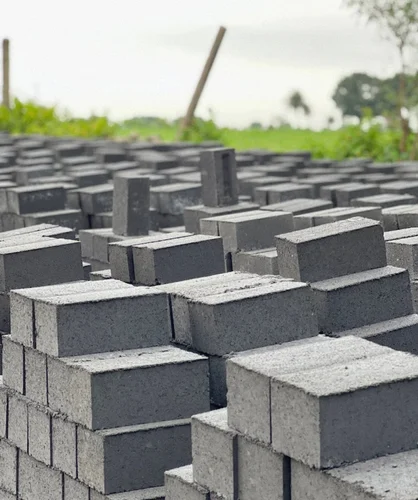
Solid Bricks Let us face it; we all aspire to build structures that would last forever. No one builds a structure intending to take it down because of wear and tear soon. This is the reason why people are always looking for ways to make their structures as durable as possible. With durability and strength in mind, only two building materials come into play; cement concrete blocks and the traditional red bricks. Since differentiating between these can sometimes be painstaking, this article will help you with that by analyzing their differences so that you make an informed choice when building your structure.
Impact on Environment